 1.How to Water Euphorbia lactea?
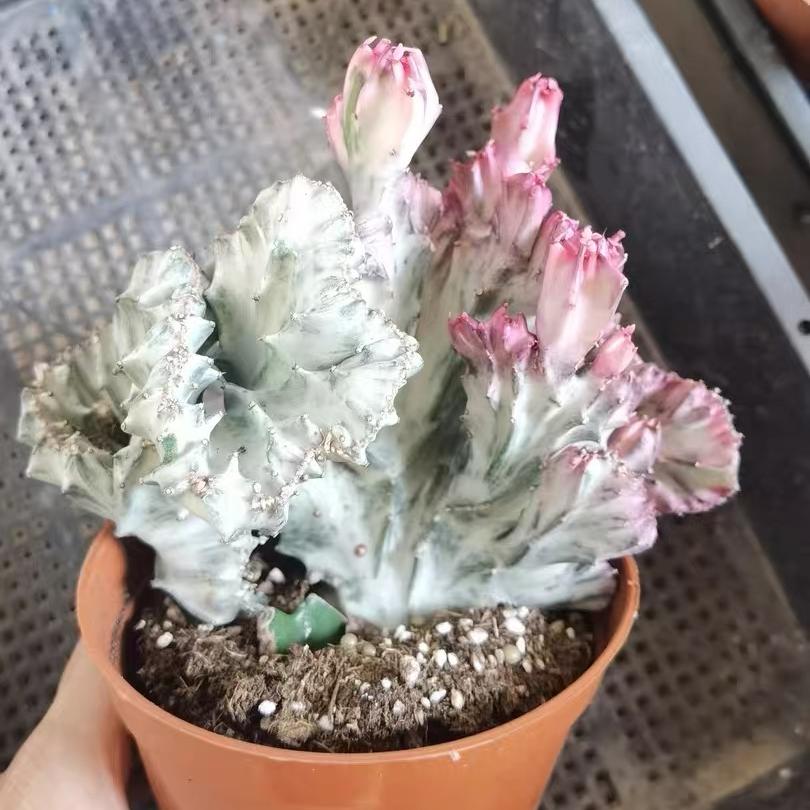
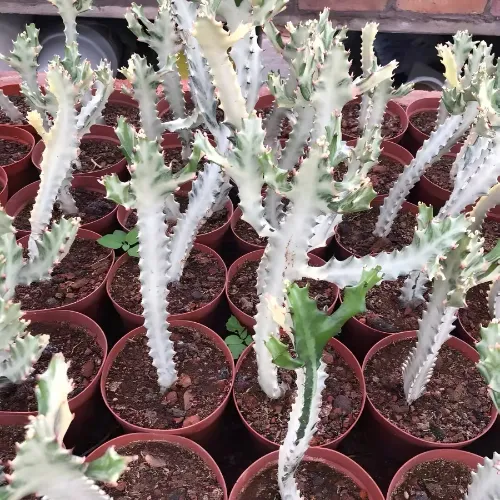
Euphorbia lactea (Triangle Spurge) has succulent stems that store ample water and nutrients. With only a few tiny leaves at the top and nearly bare stems elsewhere, it minimizes water loss through foliage—making this plant extremely drought-tolerant.
A general watering schedule of once every 10–15 days suffices. In autumn and winter, when low temperatures slow evaporation, extend the interval to once every 1–2 months. It’s a low-maintenance plant!
Always follow the "dry before wet" rule: it’s better to let the soil dry out slightly than to overwater, as excess moisture can lead to root rot
.
 2.How to Fertilize Euphorbia lactea?
Euphorbia lactea is a low-fertilizer plant—fertilization is only needed during its growing seasons: spring and summer.
For organic fertilizers, apply 1–2 times every 1–2 months in spring—no need to fertilize in summer. For liquid fertilizers or nutrient solutions, dilute them with water according to the product instructions and apply regularly during spring and summer.
In autumn and winter, low temperatures slow or even stop the plant’s growth. Fertilizing during this period is unnecessary, as it can easily cause fertilizer burn.
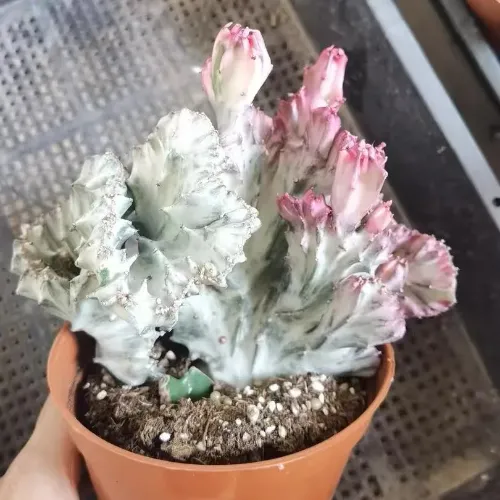
 3.How Much Sunlight Does Euphorbia lactea Need Daily?
Euphorbia lactea thrives in abundant sunlight—it’s a sun-loving succulent that needs 4–6 hours of direct sunlight or bright indirect light daily for healthy growth.
For optimal results, place it near a south or west-facing window (in the Northern Hemisphere) where it can soak up morning or late-afternoon sun. Avoid intense midday sunlight in summer, as it may cause leaf scorch or discoloration. If indoor light is limited, supplement with a grow light to prevent etiolation (leggy, stretched stems).
Insufficient sunlight will make the plant weak and spindly, losing its sturdy, upright shape. With the right light exposure, its stems will stay thick, and new growth will be lush—keeping your Euphorbia Trigona looking vibrant!
4.Euphorbia lactea: Essential Care Tips & Precautions
Euphorbia lactea produces toxic sap. Wear gloves when pruning or handling—avoid contact with skin, eyes, or pets. If exposed, rinse immediately with water. Keep it out of reach of children and furry friends for safety.
With minimal effort and these simple precautions, your Euphorbia Trigona will maintain its sturdy, vibrant growth for years!