digression:Euphorbia Obesa’s Coveted "Rust Spots": Facts vs. Fake
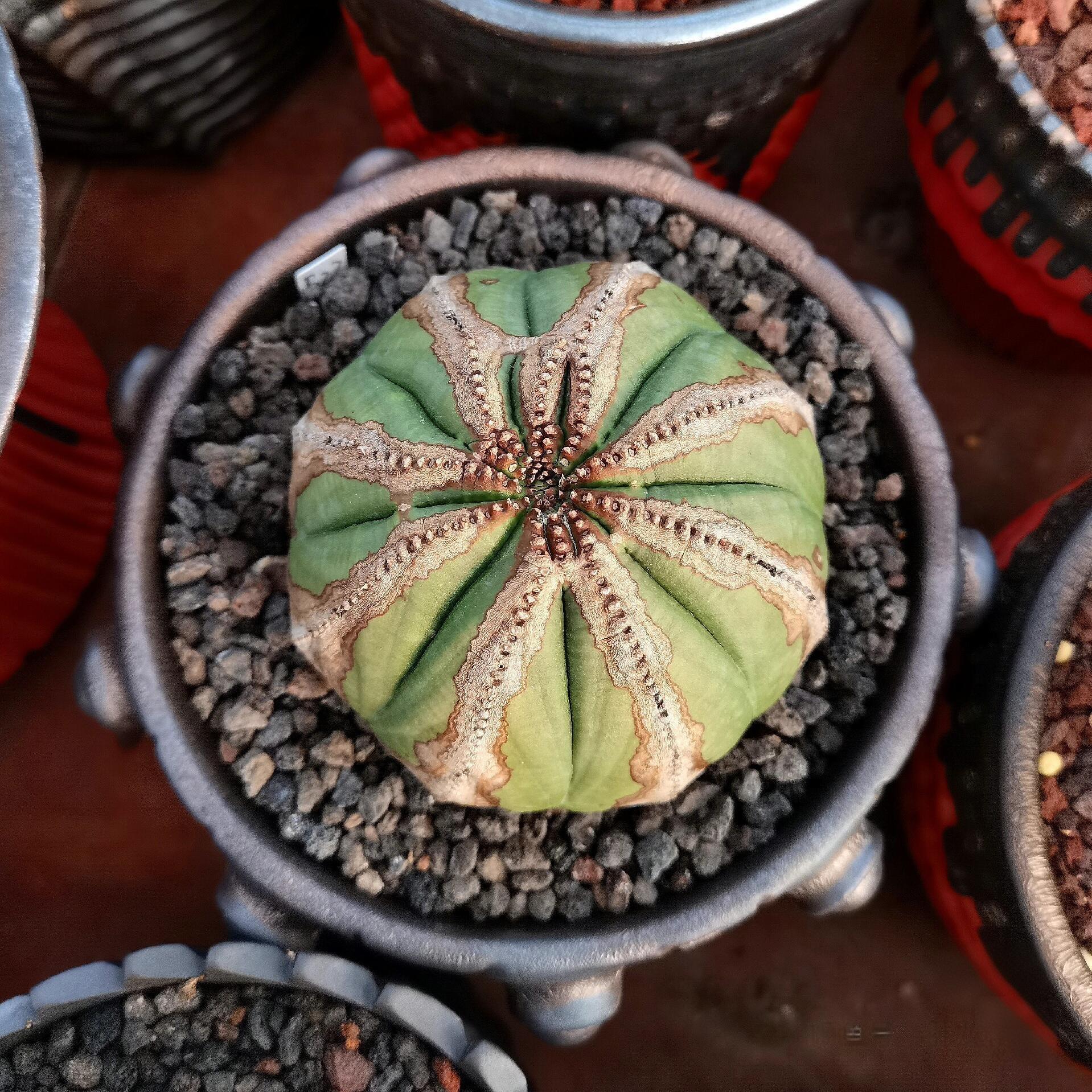
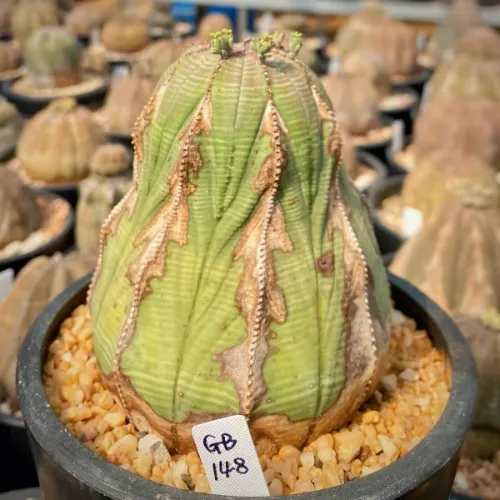
Genuine "rust spots" on Euphorbia obesa are not desirable traits but symptoms of downy mildew—a disease rampant in European greenhouses that has spread to China and the U.S. Ironically, these spots lend the plant an aged charm, driving up its market value significantly.
Manual simulation of rust spots (scraping with tools like scrapers or coins) is unethical and a common scam by sellers. Authentic rust spots take years to form—European growers often nurture plants for 15+ years to develop beautiful, natural patina.
The plant’s most delicate area is its ribs, where it blooms. Post-flowering scars evolve into the sought-after "rust spots," which become more pronounced with ample sunlight.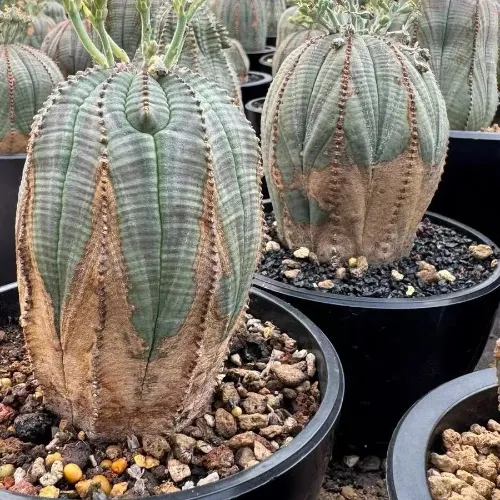
Euphorbia Obesa Care Guide: The Iconic "Baseball Plant"
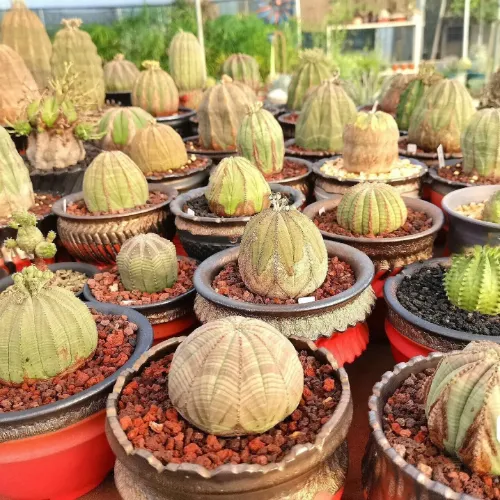
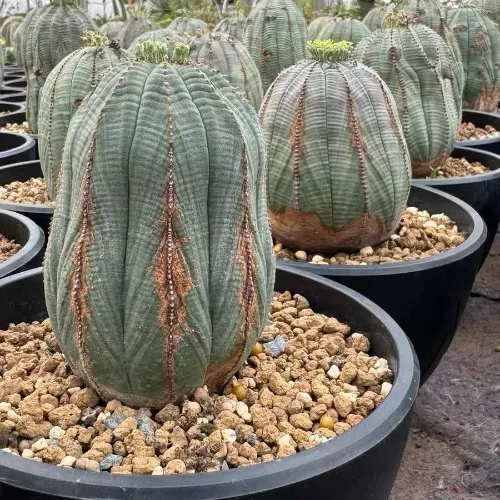
Euphorbia obesa, known as the "Baseball Plant" for its unique spherical shape, is a prized succulent among plant enthusiasts. With its distinct 8-ribbed structure, subtle leaf scars, and yellow flowers, it’s a popular choice for indoor cultivation. Native to arid regions with low annual rainfall (200–300mm) and significant day-night temperature differences, this summer-growing species has specific care needs to thrive. Note that wild Euphorbia obesa is a protected plant—all specimens available today are horticulturally propagated.
1. Core Growth Requirements
Euphorbia obesa thrives in warm, sunny environments with well-draining soil. Avoid excessive humidity or shade, as these can lead to brown spots on the stem and hinder growth. It is drought-tolerant due to its high succulence (lacking leaves and thorns) but sensitive to overwatering and frost. As a dioecious plant (separate male and female specimens), successful seed production requires careful pairing and pollination.
1.1 Light Needs
- Prefers bright, direct sunlight for most of the day. Insufficient light causes weak growth and dull coloring.
- Protect from intense midday sun during summer to prevent sunburn. Provide partial shade and good ventilation in July–September.
- Avoid dark or humid conditions, which trigger brown stem spots that mar the plant’s appearance and health.
1.2 Soil Requirements
- Requires well-draining, loose soil to prevent root rot. Ideal mix: perlite + peat moss + vermiculite + cinder (adjust ratios freely, prioritizing breathability).
- Sandy loam is also suitable for cultivation. Avoid dense, water-retentive soils.
1.3 Temperature & Overwintering
- Thrives in warm temperatures; maintain a minimum of 5℃ in winter for healthy growth.
- When temperatures drop below 2℃, reduce watering to induce dormancy. This helps prevent frost damage and root rot.
- In cold regions (e.g., -4℃ in a greenhouse), monitor with a water basin—if water freezes, provide gentle heating. Avoid outdoor exposure in freezing weather.
1.4 Watering Guidelines
- Follow the "dry before wet" rule: water thoroughly only when the soil is completely dry.
- Avoid overhead watering to prevent rot from poor ventilation.
- Gradually increase watering in spring, adjusting based on weather conditions.
- Reduce watering in autumn (September–December) and keep soil slightly dry in winter.
- Mature plants require stricter water control compared to young specimens.
2. Propagation Methods
2.1 Seed Propagation (Primary Method)
- For seed collection: Pair male and female plants, ensure successful cross-pollination, and harvest seed pods promptly before they split open (to avoid seed loss).
- Sow seeds in well-draining soil with ample sunlight and moderate dryness. Maintain loose, breathable growing medium.
2.2 Grafting (Rarely Used)
- Grafted Euphorbia obesa occasionally appears on the market, sometimes developing multi-headed growth.
- Grafting is not the preferred method for home cultivation, as seed-grown plants retain the species’ natural spherical shape.
3. Key Precautions
3.1 Toxic Sap Warning
- Euphorbia obesa secretes toxic white sap. Avoid contact with skin, eyes, or mucous membranes—wear gloves when handling or pruning.
- Sap may cause skin irritation; rinse affected areas immediately with water if exposed. Keep away from children and pets, and do not ingest.
3.2 Protected Status
- Wild Euphorbia obesa is endangered due to harsh natural habitats and low population density. It is protected globally, and all commercial specimens are horticulturally propagated.
4. How to Distinguish Male vs. Female Plants
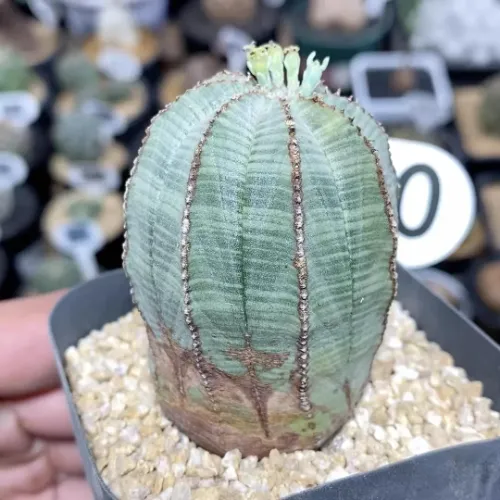
- Observing the 球体 (spherical body) alone is inaccurate—identify gender by examining the flowers:
- Female plants: Produce a single style in the center of the flower, divided into three sticky stigmas (to capture pollen).
- Male plants: Have two pollen sacs per stamen, with each flower containing three stamens.
- Note: Male plants are far less common than female plants, making natural pollination and seed collection challenging.
5. Species Highlights
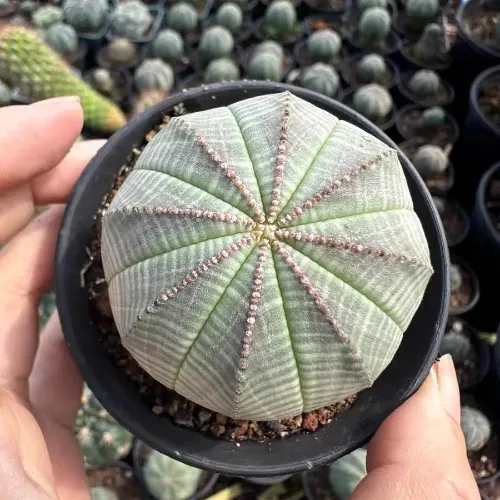
- Euphorbia obesa stands out among Euphorbia species for its perfect spherical shape and distinct ribbed pattern.
- Despite long-term cultivation in China, it remains rare due to dioecious reproduction and imbalanced gender ratios.
- Its unique adaptation to arid, shaded/rocky habitats (rare for Euphorbias) and high succulence make it a fascinating addition to succulent collections.