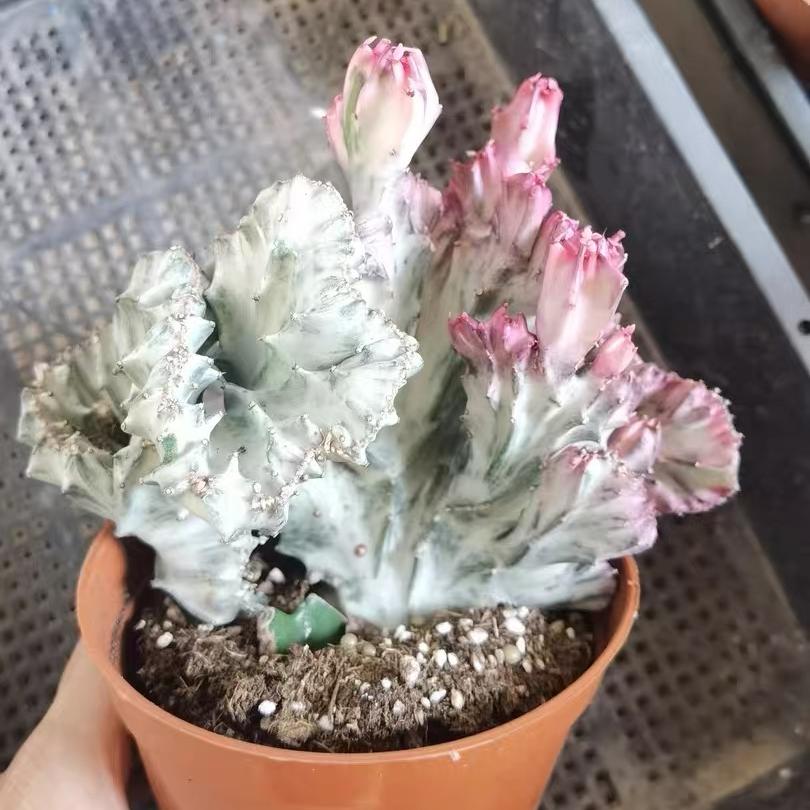
1. Lophophora alberto-vojtechii
The smallest variety (wild form) – dark green with sharp-edged tubercles.。
2. Lophophora jourdaniana :
Small-spined variety with flower colors available in red, white and pink – poor reproductive capacity.
Original species of Lophophora (wild form) with numerous geographic varieties.
(Wild form) – A variety of Lophophora. The Latin epithet "decipiens" means "deceptive" (camouflaged). Some sellers incorrectly label it as "You Yinguang" (Tuberculate Silver Crown) – this is a total misnomer. "You Yinguang" refers to artificially hybridized and selected traits, whereas this is a naturally occurring wild variety.
Multi-headed Lophophora "Zichui" (Clumping Form) – offsets sprout from the base, forming dense clusters. Smooth, spineless globes with pale pink/white flowers, easy to care for.
6.Lophophora williamsii var. texana (texensis )
Lophophora williamsii var. texana – a large-sized form of Williamsii. Mature plants grow to a bigger diameter, with thick, smooth spineless bodies and pale pink/white blooms. Hardy and easy to maintain.
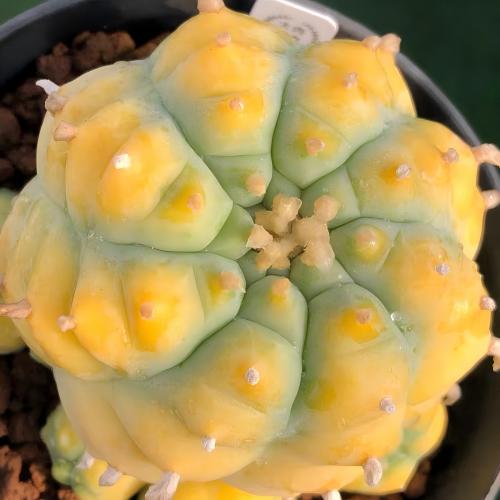
8. Lophophora lutea
Yellow-skinned Lophophora – features smooth, spineless globes with a unique yellowish hue. Blooms pale pink or white flowers and is low-maintenance.
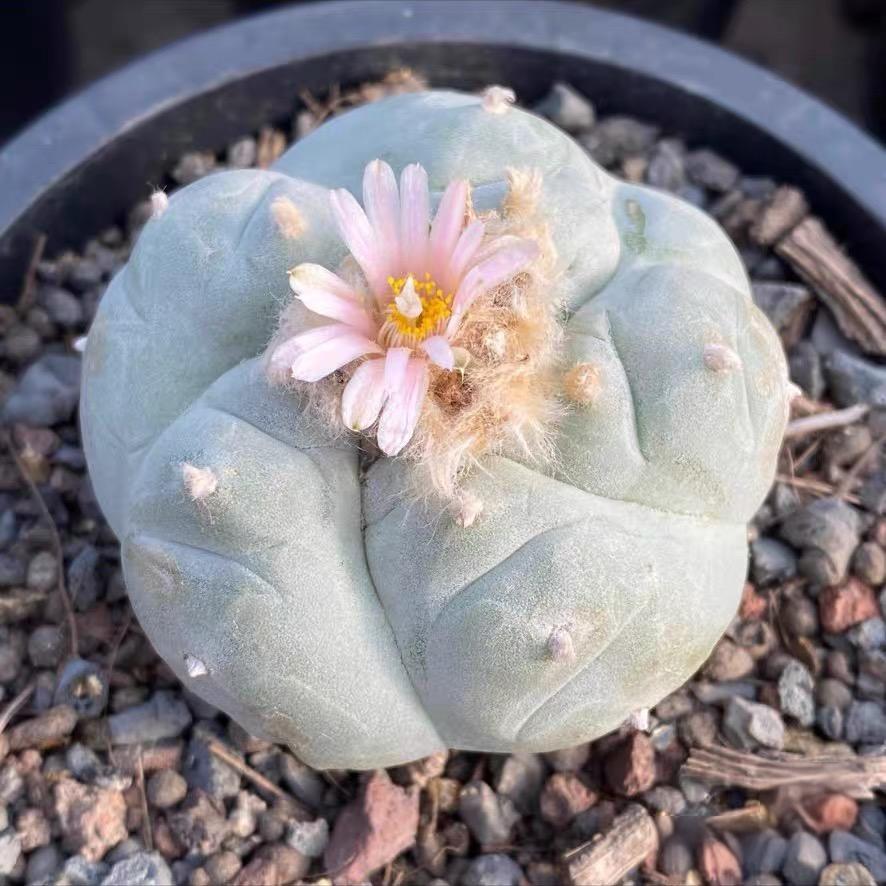
Lophophora alberto-vojtechii is the "mini version" of Lophophora – even the smallest in the genus! Native to San Luis Potosí, Mexico, it grows on dry limestone slopes. Mature plants are only 3-5cm wide, super slow-growing, with flat, smooth, spineless bodies and cute pale pink/white flowers.
Care is easy: Thrives at 18-28℃ (no over 35℃ in summer, keep above 5℃ in winter). Needs plenty of filtered light (avoid direct sun), well-draining slightly alkaline soil, and water only when the soil is totally dry.
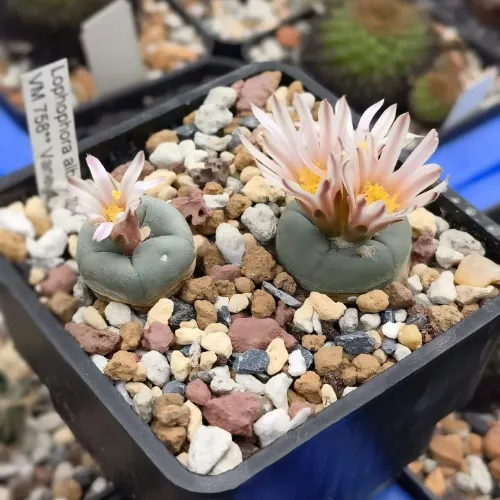
2. Lophophora jourdaniana :
a rare Lophophora variety with striking crimson-red flowers, distinct from common species primarily by its blooms. Morphologically similar to typical Lophophora (small, spineless globes with woolly tops), it has a darker glaucous green body and forms small clumps up to 15cm in diameter at maturity, with individual stems 4cm tall and 5cm wide.
Once native to Mexico’s Chihuahuan Desert, wild populations are now extremely scarce – it’s listed under CITES Appendix 2 due to decline from overharvesting. Cultivated specimens remain rare, valued for their unique red-violet flowers (2.5–3.5cm wide) that bloom from the central woolly areoles.
Care mirrors common Lophophora: well-draining soil, bright filtered light, and infrequent watering. A collector’s gem for its rarity and distinctive floral color, it stands out among typical pink/white-flowered varieties.
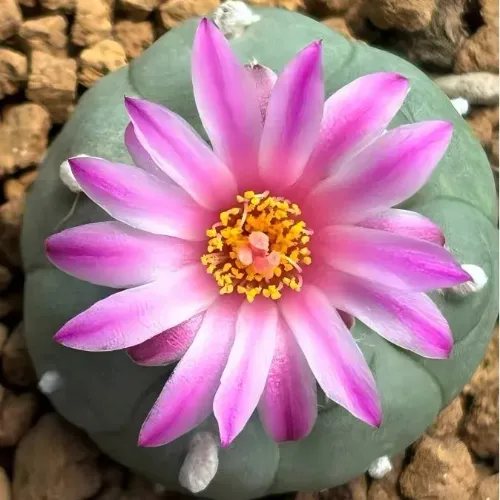
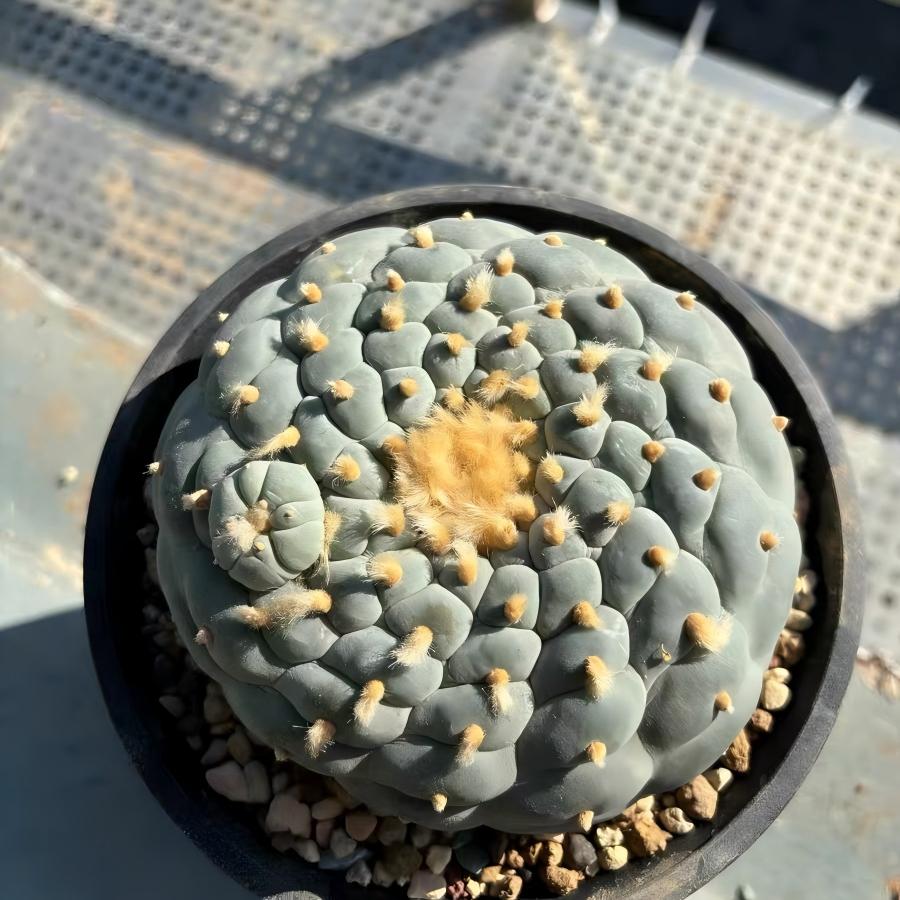
3. Lophophora williamsii
Lophophora williamsii – native to Mexico and southwest USA. Mature plants reach 8–12cm in diameter, with smooth gray-green spineless globes and pale pink/white flowers. Slow-growing and iconic.
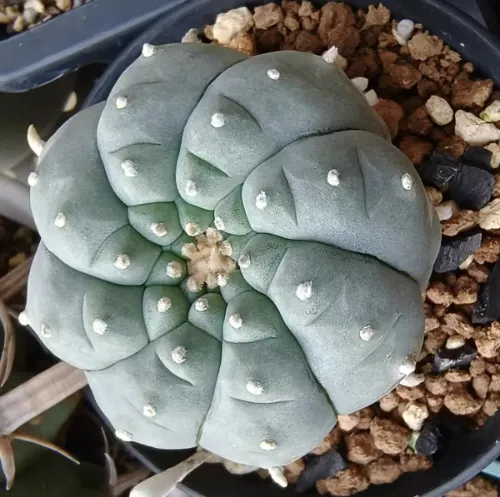
4. Lophophora williamsii var. decipiens
nearly identical to Lophophora diffusa in form, with its standout trait being an exceptionally pale, whitish hue (most striking in bright daylight). It shares the same origin (Mexico, southwest USA) and care needs as Lophophora williamsii: smooth, spineless globes, pale pink/white blooms, and slow growth.
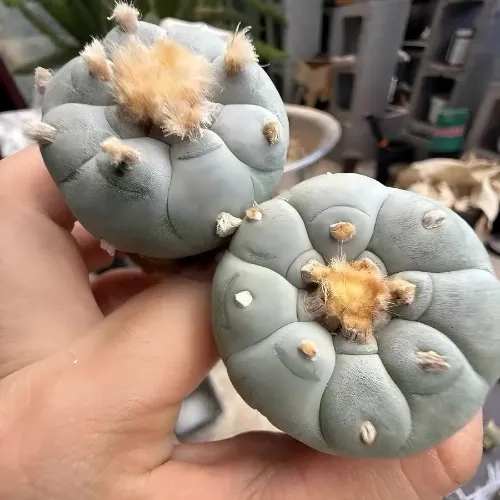
5. Lophophora williamsii var. caespitosa
Lophophora williamsii (Clumping/Zichui Form), commonly known as Peyote, is an incredibly ornamental variant of this classic species. The name "Zichui" aptly describes its prolific offset-producing trait – starting as a single flattened globule in its early growth stage, it begins sprouting numerous baby plantlets continuously from the base areoles or around the stem once mature. These small globes gradually grow and cluster tightly around the mother plant, eventually forming dense, lush clumping colonies.
Native to the arid deserts of southwestern USA (Texas, New Mexico) and northern Mexico, it is perfectly adapted to dry, low-water native environments. Its thick, fleshy taproots can penetrate deep into the soil to store moisture, supporting the growth of multiple globes in the clumping form. A mature clump can reach 20–30 cm in diameter, with dozens of flattened globes of varying sizes nestled together in an elegant, irregular arrangement. The globes’ epidermis is mostly grayish-green or emerald green, coated with a delicate layer of white powdery bloom that feels smooth and soft to the touch. Being completely spineless, it lacks the sharpness of typical cacti and exudes a gentle charm – only sparse white woolly hairs grow on the areoles, echoing the origin of its Chinese common name "Wuyuyu" (Black Feather Jade).
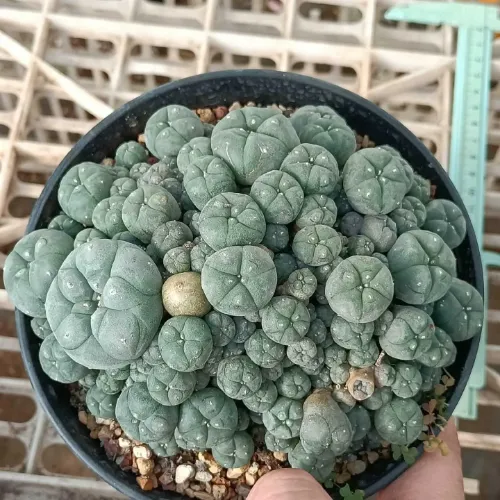
6.Lophophora williamsii var. texana (texensis )
Basically, it's impossible to distinguish this variety. Many of them are treated as ordinary varieties
6.Lophophopra diffusa (Wild varieties)
Lophophora diffusa (commonly known as Diffuse Peyote or Green Crown Cactus) is a distinct species celebrated for its vibrant green hues. Native to central Mexico, particularly in regions like San Luis Potosí, it thrives in arid limestone slopes with well-draining soil.
Its defining feature is its bright emerald to lime-green epidermis—unlike the gray-green tones of many other Lophophora varieties—often dusted with a thin, waxy powdery bloom that enhances its fresh, lush appearance. The 球体 (globes) are low-growing and flattened, with soft, indistinct ribs that blend into rounded tubercles, giving it a smooth, rounded silhouette. Completely spineless, its areoles bear only sparse white woolly hairs, adding a subtle textural contrast to its vivid green body.
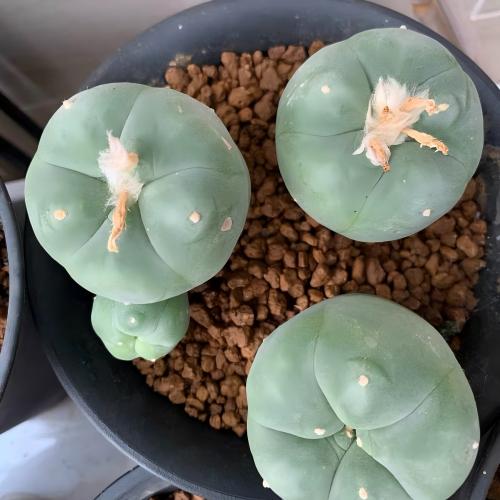
7. Lophophora fricii (Wild varieties)
commonly known as "Yinguanyu" (Silver Crown Jade) in China, is a highly distinctive and sought-after variety in the Lophophora genus. Native to arid rocky areas near Coahuila, northern Mexico, it thrives on limestone slopes with poor, extremely well-draining soil.
Its most iconic feature is the dense, fine white powdery bloom covering its surface, paired with a blue-green to gray-green base color—hence the name "Silver Crown" referencing this signature white frost. Growing primarily as a single plant (rarely clustering), the mature globes are low-growing and flattened, reaching 5–8cm in diameter. It has 5–13 indistinct, broad, tuberculate ribs, with degenerated areoles that only bear sparse white woolly hairs, giving it a smooth, gentle texture.
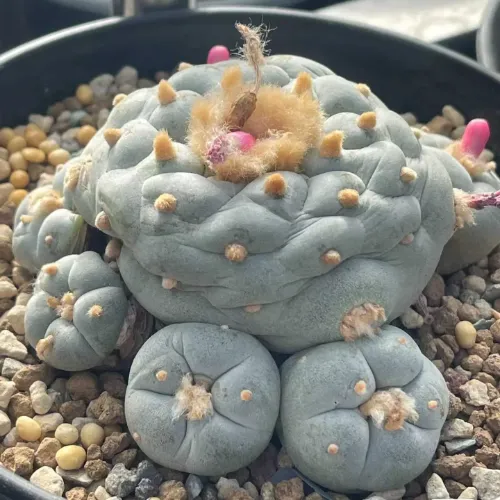
8. Lophophora lutea
commonly known as "Huangguanyu" (Yellow Crown Jade) in China, is a distinctive variety in the Lophophora genus that gains popularity for its unique golden hues. Native to arid deserts of northern Mexico, specifically in regions like San Luis Potosí and Coahuila, it thrives on gravelly limestone terrain with poor, highly porous and well-draining soil.
Its standout feature is its overall yellowish tone: the epidermis ranges from pale yellow and light yellow-green to waxy yellow, with some individuals dusted in a thin white powdery bloom. Under sunlight, it exudes a warm, gentle luster—hence the name "Yellow Crown" referencing this signature golden texture. Growing primarily as a single plant (rarely producing offsets), the mature globes are low-growing and flattened, reaching 5–7cm in diameter. It has 6–10 rounded, non-sharp ribs arranged in broad, tuberculate protrusions; its areoles are fully degenerated, bearing only sparse white woolly hairs, resulting in a smooth, spineless surface that feels approachable and soft to the touch.