While the mature forms of these three cacti have clear distinctions, their seedlings (1–3 cm in diameter) are easy for beginners to mix up due to their small size and underdeveloped features. But there’s no need to worry—just focus on three core traits: white powder coverage, vertical rib shape, and hair details, and you can quickly tell them apart to avoid buying the wrong variety or confusing their care needs.
I. Most Intuitive: White Powder Coverage – Clear at a Glance
White powder on the seedling surface is the most distinct "identity marker" for the three species. Even with tiny stems, the differences are obvious:
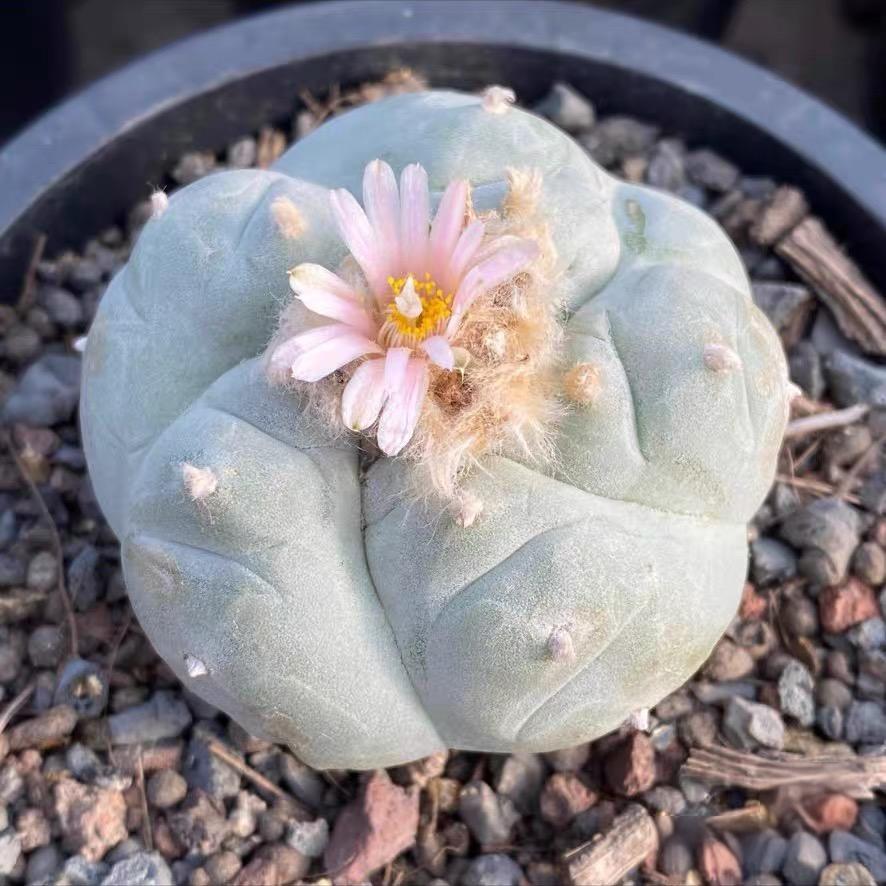
- Lophophora Diffusa (Silver Crown Cactus) Seedlings: Covered in a thin layer of white powder, like a dusting of fine powdered sugar. A hazy white sheen is clearly visible when viewed from the side. Gently rub with your fingertip, and the powder will fall off, revealing the pale green skin underneath. The area where powder falls won’t regrow it quickly, leaving a noticeable mark.
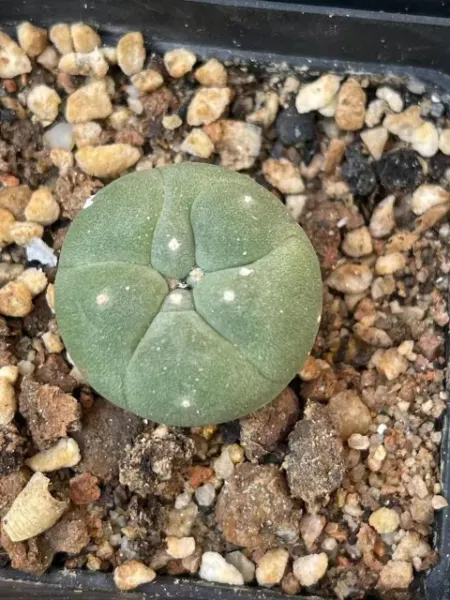
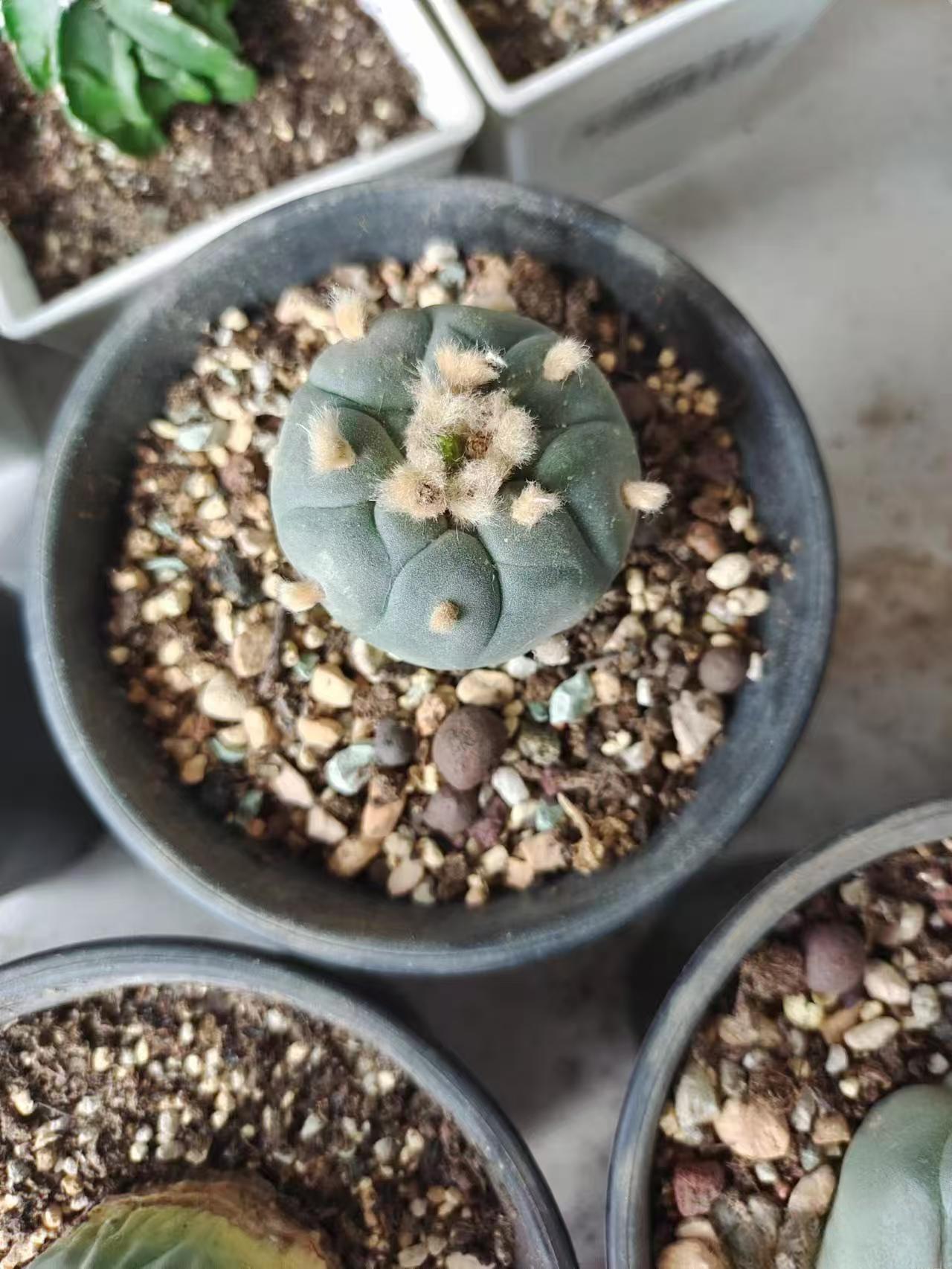
- Lophophora williamsii peyote seedlings: No powder at all! The skin is as smooth as if coated in a thin layer of wax, showing an even light or bright green color with a natural sheen in sunlight. Only the top growth point has extremely sparse short white hairs (visible only when you get within 10 cm). The whole seedling looks clean and fresh—definitely the "purest green" of the three.
- Lophophora Fricii (Emerald Crown Cactus) Seedlings: Have an ultra-thin "invisible powder"—far lighter than that of L. Diffusa. At first glance, you might think there’s no powder, but compared to L. Williamsii, its skin has less luster and a faint hazy look. Moreover, the powder is unevenly distributed: there’s even less on the rib crests, which appear a darker green, creating subtle color differences.
II. Next, Feel the Vertical Ribs: Sharpness Differs Early On
Though the vertical ribs of seedlings aren’t as prominent as those of mature plants, differences in shape and texture are already apparent—perfect for "hands-on" identification:
- Lophophora Diffusa Seedlings: Ribs are relatively thick, with rounded crests. Run your finger along the ribs, and you’ll feel a smooth surface with no 凸起. They also have fewer ribs (usually 5–7), spaced widely apart, giving the seedling a "chubby" look.
- Lophophora williamsii peyote seedlings: Ribs are thin but distinct, with crests softer and rounder than those of L. Diffusa. When touched, there’s almost no "rib feel" at all. They have more ribs (6–8), closely spaced, making the entire stem look plump and rounded without any sharp edges.
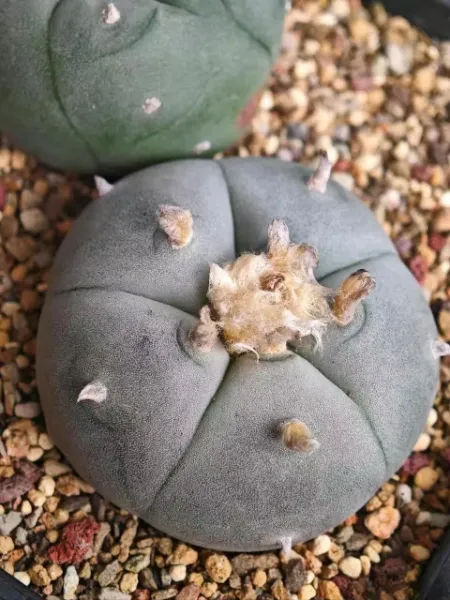
- Lophophora Fricii Seedlings: Ribs have the most "personality"—the crests are slightly raised with a faint sharpness (the only one of the three with a noticeable "rib texture"). Even for 1 cm seedlings, you can see the linear shape of the ribs. They have a similar number of ribs to L. Williamsii (6–8), but evenly spaced. The rib crests, with less powder, appear darker green, making the lines even clearer.
III. Finally, Check the Hairs: The Trickier They Hide, the Clearer the Variety
Seedlings have few hairs, but differences in their location and visibility hold key details for "final confirmation":
- Lophophora Diffusa Seedlings: Hairs are hidden under the white powder at the top. You need to brush aside a little powder to see the extremely short white hairs—few in number and inconspicuous, easy to miss if you don’t look for them on purpose.
- Lophophora williamsii peyote seedlings: Hairs are exposed directly at the top! Though sparse, they’re not hidden by powder, so you can clearly see the white "star-like" hairs (slightly longer than those of L. Diffusa). The contrast with the green skin is obvious, catching your eye at a glance.
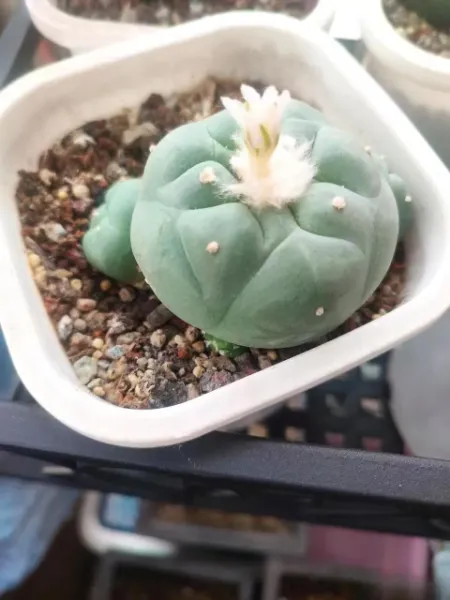
- Lophophora Fricii Seedlings: Hairs are the most "hidden"—only the top growth point has ultra-fine transparent hairs. You can barely see them unless you look very close under strong light. Their color is similar to the skin, almost "invisible"—by far the hardest hairs to spot among the three.
Summary: 3-Step Quick Identification for Beginners
- Check the powder: Obvious powder → L. Diffusa; faint hazy powder → L. Fricii; no powder at all → L. Williamsii (prioritize this step—it works for 90% of identification cases).
- Feel the ribs: Faint sharpness → L. Fricii; soft and round with no rib feel → L. Williamsii; thick, round and smooth → L. Diffusa.
- Look for hairs: Exposed white hairs at the top → L. Williamsii; short hairs hidden under powder → L. Diffusa; transparent hairs visible only in strong light → L. Fricii.
Keep these three tips in mind, and you can easily tell apart seedlings of L. Diffusa, Williamsii, and Fricii—even the tiny newly sprouted ones. With the right care methods for each variety, your seedlings will thrive!