Roots are key to judging a peyote seedling’s health, but direct inspection is often impossible—such as with potted seedlings bought online or balled-and-burlapped ones from offline stores. In these cases, you can accurately identify if a seedling is healthy by observing details in three dimensions: globe condition, growth signs, and attached medium, helping you avoid "hidden diseased seedlings" and "stunted seedlings".
I. First, Check the Globe’s Appearance: Plump and Undamaged Is the Basic Sign of Health
A healthy peyote seedling’s globe has a "vibrant" texture. If you notice the following issues, there’s a high chance of health risks:
- Plumpness: Squeeze Gently to Test Elasticity
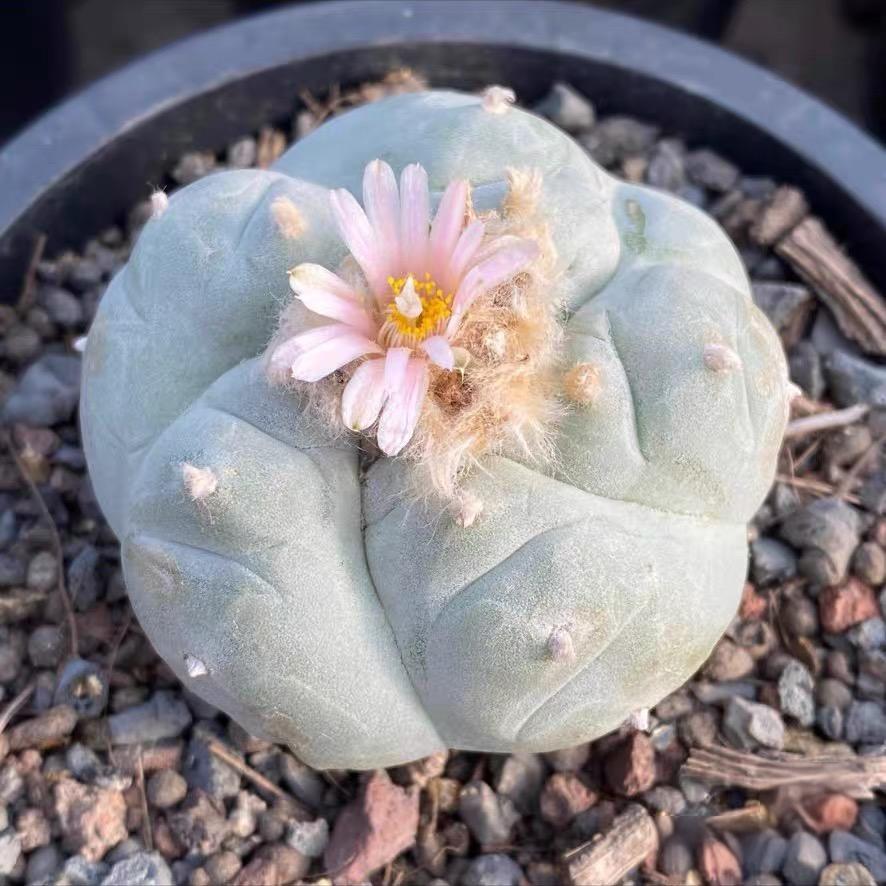
A healthy globe is round and plump, with tight, glossy skin. When you gently squeeze it (with enough force to avoid leaving marks), you’ll feel obvious elasticity—no softness or collapse. It’s important to distinguish between "temporary wilting from water shortage" and "stunted seedling shrinkage": The former usually shows fine horizontal lines on the skin and regains plumpness 1–2 days after watering; the latter feels soft and dull for a long time, even with local depressions on the globe, indicating exhausted nutrients and difficulty recovering growth later.
- Scars: Inspect to Avoid Diseases
The globe’s surface should be free of abnormal spots, damage, or mucus. Brown/black spots with blurry edges and a sticky feel are typical signs of fungal diseases; white powdery coverings may indicate powdery mildew. Even mechanical damage (such as chips or scratches) doesn’t directly mean the seedling is unhealthy, but it’s prone to bacterial infection and rapid rot in humid environments—so it’s better to avoid such seedlings altogether.
- Color: Check Uniformity to Identify "Chemically Variegated Seedlings"
Ordinary peyote seedlings are uniformly light or dark green, without "uneven coloring" (sudden lightening/darkening in local areas); variegated varieties (such as Lophophora williamsii peyote seedlings f. variegata) have evenly distributed and stable variegation, with no "local fading" or "blackened edges of variegation". If the variegation is only scattered in a few spots, dull in color, or even fades when wiped with a damp cotton swab, it’s likely a "chemically variegated seedling" (artificially dyed). It will fade to a normal color after 1–2 weeks of cultivation, and in severe cases, it may wither due to dye damage.
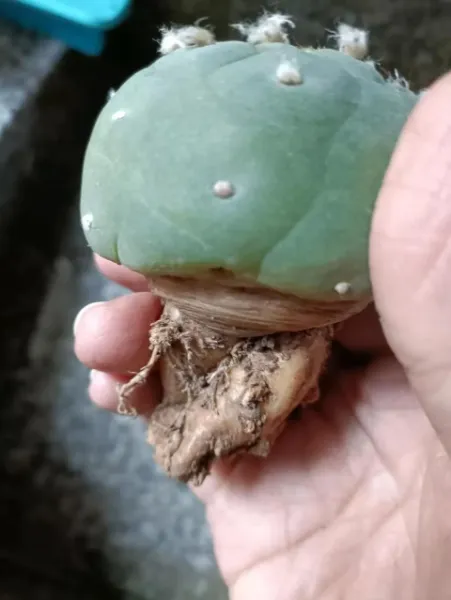
II. Next, Check Growth Signs: "New Activity" Means Sufficient Vitality
Although Lophophora williamsii peyote seedlings slowly, healthy ones will definitely show subtle growth traces. If there’s no new activity at all, it may be a "stunted seedling" or "dying seedling":
- Apical Growth Point: Look for Pale Green Bulges
The apical growth point of a healthy seedling is bright pale green, slightly bulging, and smooth to the touch with no impurities. If the growth point turns brown, sinks, or is covered with white dry fuzz, growth has stagnated—most likely due to "insufficient nutrient supply" after root damage, leading to apical withering.
- New Root Traces: Look for Thin White Signals
For potted seedlings (such as those with original pots bought online), check the drainage holes at the bottom of the pot—healthy seedlings may have thin white new roots emerging from the holes, or faint "small bulges" on the soil surface (formed by new roots pushing up the soil). If only dry brown fibrous roots are visible at the drainage holes, the roots have aged and lost new vitality.
- Globe Adhesion: Check Stability
The bottom of a healthy seedling’s globe fits tightly with the soil, with no "suspension feeling". When you gently shake the pot, the globe won’t tilt. If the globe tilts significantly (excluding external collision factors), it’s mostly due to "insufficient soil-gripping ability" after root rot, making it prone to lodging and difficult to survive later.
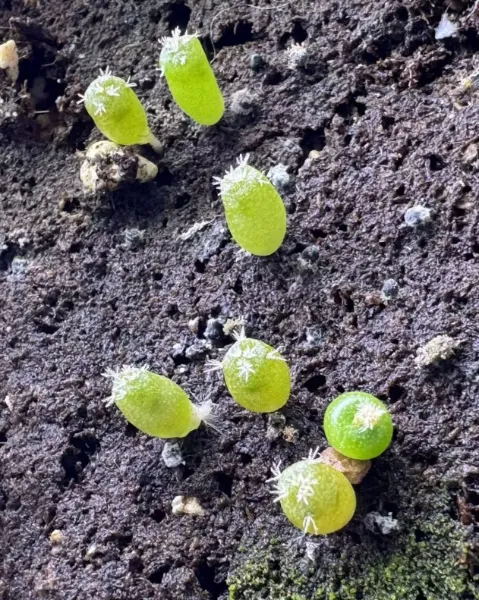
III. Finally, Check the Attached Medium: Clean and Undamaged Hides the Health Code
The soil and packaging around the seedling also reflect its health, especially the "original pot and soil" of seedlings bought online, which contains more critical signals:
- Soil: Observe Looseness and Smell
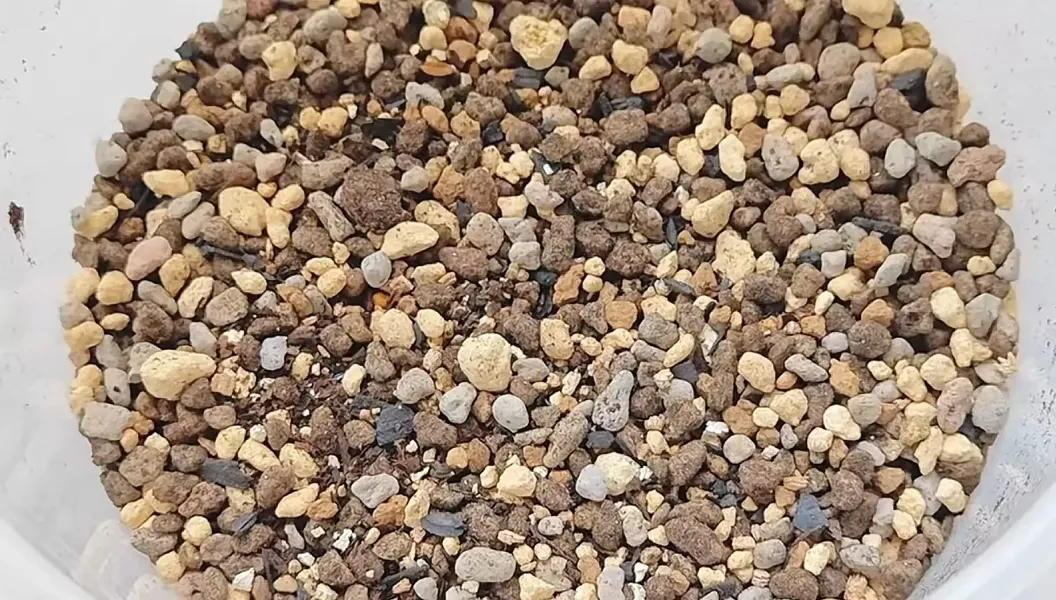
The potting soil of a healthy seedling should be loose granular soil (such as a mixture of lava rock and peat), with no caking or damp mold. When you lean in to smell it, there’s only a fresh earthy scent—no sour rot or musty smell. If the soil is caked and sticky, or has white mold spots on the surface, it indicates long-term waterlogging, and the roots are likely damaged. Even if the globe seems intact temporarily, it may be in a "dying state".
- Insects and Eggs: Look for Hidden Risks
Carefully check the soil surface and the junction of the globe and soil—healthy seedlings have no small insects such as aphids or red spiders, nor white/brown eggs (red spider eggs are often hidden in the gaps at the bottom of the globe). If you find crawling insects or "pinhole-sized insect bites" on the globe’s surface, the seedling has been infested by pests, which will continue to damage the globe later, making it difficult to grow well.
- Packaging: Check Dryness
If seedlings bought online are wrapped in moss or paper towels, the packaging of healthy seedlings should be dry with no moisture, and the globe has no "water stains". If the packaging is damp, the globe’s skin is wrinkled and feels sticky, it means the seedling was damaged by stuffiness during transportation, making it prone to bacterial growth. After receiving it, you must immediately remove the pot and check the roots; otherwise, it will rot quickly.
In summary, the core of judging a peyote seedling’s health can be summed up in three sentences: the globe is plump and elastic, the apex is pale green with new growth, and the potting soil is clean with no peculiar smell. On the contrary, if you find "shrunken globe, obvious scars, no new growth, or moldy potting soil", you must choose carefully to avoid wasting effort on later maintenance.