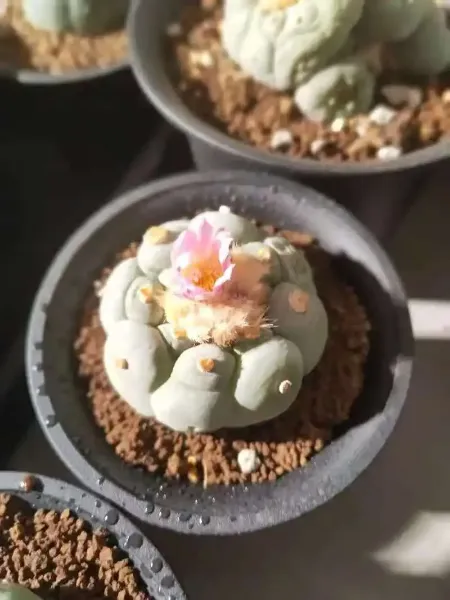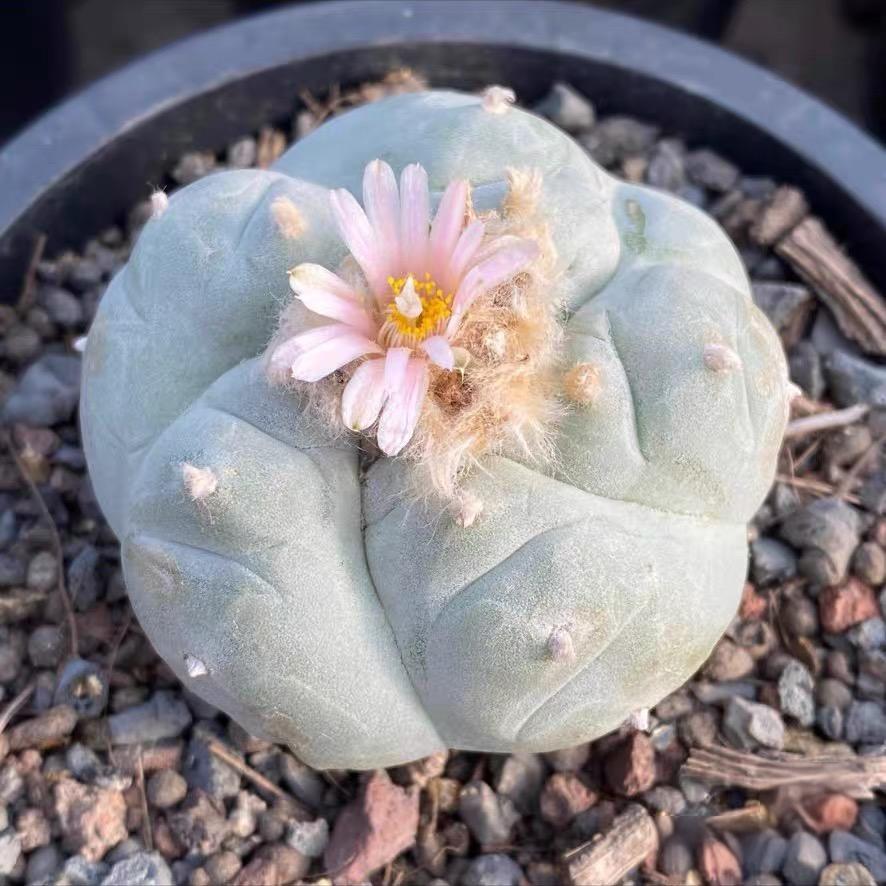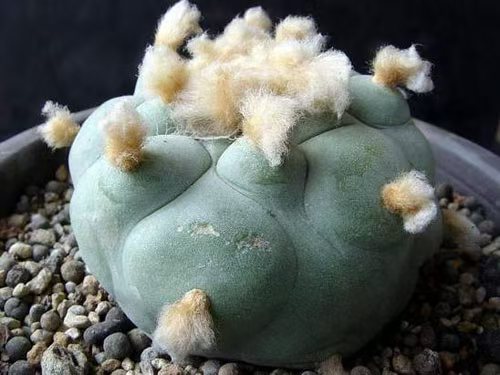
Last autumn, when I received those Lophophora seedlings from a fellow plant enthusiast, they were no bigger than a fingernail. Their turquoise globes were coated with a thin layer of white powder, like tiny glutinous rice balls dusted with fine salt—so fragile that I dared not even breathe too hard near them. Back then, my only thought was "to help them grow strong," but I never anticipated that just three months later, their first winter would keep me on tenterhooks for the entire season. Now, as spring breeze blows across the balcony, looking at these plump, round little lives with even more uniform white powder in the flower pots, those days of anxiety turning to relief suddenly become clear. I can't help but write down this experience—not only as a memorial to this special period of care, but also to offer a practical reference for fellow succulent lovers who are also guarding their young seedlings.
I. "Anxious Preparation" Before Winter: The "Fragile Heart" Phase of Cradling Seedlings
Although Lophophora belongs to the Cactaceae family and mature plants can withstand short periods of low temperatures, the resistance of seedlings is as fragile as newly sprouted buds. At the end of October, when the wind first carried a hint of coolness and the thermometer on the balcony dropped below 15°C (59°F), I began to feel restless. After scouring succulent forums and care guides, the phrase "Lophophora seedlings are prone to frostbite below 10°C (50°F) and may even turn mushy below 5°C (41°F)" hit my nerves like tiny hammers, instantly making me treat these seedlings as "treasures in the palm of my hand."
During that time, I developed a "strange habit": every morning, the first thing I did after opening my eyes wasn't reaching for my phone, but rushing to the balcony in my pajamas. I'd stare at the thermometer for a few seconds, then squat down in front of the flower pots, my nose almost touching the seedlings—carefully checking if their globes had softened, if the turquoise color of their skin had dulled, or if the white powder had rubbed off. Even watering became a "precision task": using a dropper, I added only two or three drops around the edge of each pot, fearing that even a little moisture in the soil would cause the roots to turn black from frost if the temperature dropped suddenly. To prepare for protection, I scraped off the old sealant from the gaps in the balcony window frames and reapplied a new layer; I found insulation film at home, cut it into circles slightly larger than the pots, and carefully pasted it on the outer sides of the pot walls, like wrapping the pots in thin cotton jackets; I even specially selected a mini constant-temperature heating mat online, setting a minimum temperature of 12°C (53.6°F), just in case a cold wave hit suddenly and the seedlings had no "warm stove" to rely on. Looking back on that period of nervousness now, it really felt like taking care of a newborn baby—no carelessness allowed.
II. "Meticulous Care" in Severe Winter: Balancing Temperature and Light
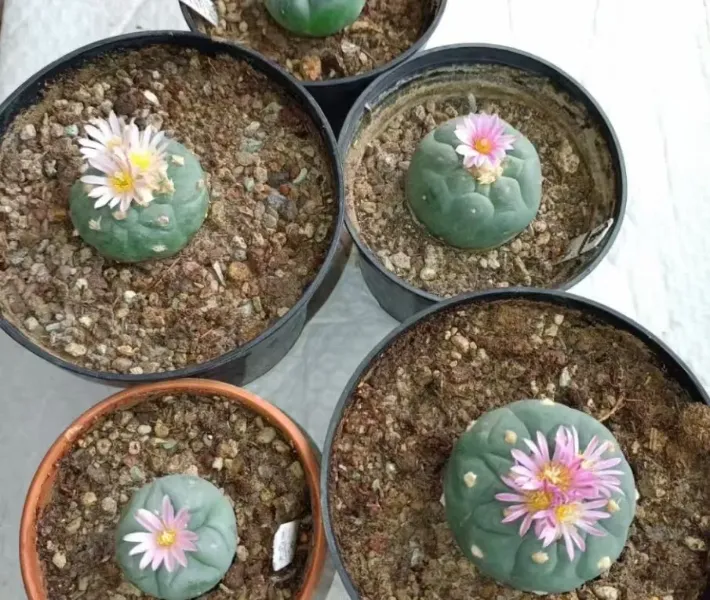
One night in mid-November, the wind outside howled so loudly that the windows buzzed. When I checked the thermometer the next morning, the lowest nighttime temperature had dropped to 8°C (46.4°F). I was so frightened that I immediately moved the Lophophora williamsii (peyote)seedlings from the balcony to the window sill indoors. But just as I breathed a sigh of relief, a new problem emerged—although the indoor temperature could be maintained at around 15°C (59°F), the light was far less sufficient than on the balcony. Lophophora is naturally a "sun-loving plant"; prolonged lack of light would cause the seedlings to stretch desperately toward the light, resulting in thin stems and elongated globes, which would only weaken their resistance. Even if they didn't suffer from frostbite, they would end up "stunted."
With no other choice, I had to start a "daily pot-moving routine": every morning at 8 o'clock, when the sun first slanted into the living room, I would move the pots to the flower stand by the window, allowing the seedlings to just catch the diffused light through the glass—I dared not expose them to direct sunlight, fearing that the strong winter sun, unobstructed by summer clouds, would burn the seedlings' skin and leave ugly sunspots. By 4 o'clock in the afternoon, when the sun began to set and the temperature near the window slowly dropped, I would move the pots back to the coffee table indoors, away from the window—preventing the low nighttime temperature from seeping through the glass and giving the seedlings a "cold shock." I also adjusted the watering rhythm, adopting the principle of "water only when the soil is dry": before each watering, I would insert a toothpick into the bottom of the soil; only if there was no trace of moisture when I pulled it out would I gently spray a circle around the edge of the pot with a small spray bottle, stopping as soon as the soil was just moistened. This way, the roots wouldn't be thirsty, and there would be no water accumulation in the soil. Once, when I went on a three-day business trip, I specially placed a hygrometer next to the pots and asked my family to check it for me remotely every day. The first thing I did when I got back was rush to see the seedlings, and only when I saw they were still plump did I finally feel at ease.
III. "Surprising Inspection" After Spring: Reflections on Growth
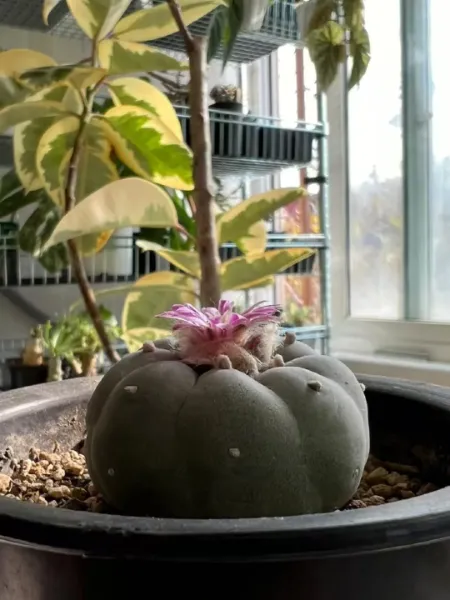
At the end of February this year, the winter jasmine flowers downstairs bloomed quietly, and the temperature on the balcony gradually stabilized above 15°C (59°F). When I moved the Lophophora seedlings back to the balcony, I specially found a magnifying glass and squatted down in front of the pots to observe carefully—not only were there no traces of frostbite on the seedlings, but their globes were even plumper than before winter. Their skin was still smooth, with no signs of wrinkling or mushiness; to my greater surprise, two of the seedlings had sprouted tiny side buds the size of rice grains on their sides, coated with a faint layer of white powder, like little heads just waking up—extremely cute. At that moment, all the anxiety of the past winter, the trouble of moving the pots every day, and the worry during my business trip suddenly turned into a strong sense of accomplishment, even making my fingertips tingle with excitement.
Looking back on this care experience, I have summed up several key points for Lophophora seedlings to overwinter successfully:
Temperature is the core line of defense—the ambient temperature must be kept above 10°C (50°F). Once the temperature drops, either move the seedlings indoors in time or use protective measures such as heating mats and insulation film; never let the seedlings "catch a cold."
Light is the foundation of growth—although winter light is weak, it is still necessary to ensure 3-4 hours of diffused light every day. Even if it means moving the pots multiple times, never let the seedlings lack light, otherwise their resistance will be greatly reduced after stretching.
Watering requires "extreme restraint"—in low-temperature environments, the water absorption capacity of the seedlings' roots weakens; overwatering will only cause the roots to rot in water. "It's better to keep the soil dry than too wet" is far safer than "frequent watering."
Patience is the best care skill—succulent care is never a "quick success" process, especially for seedlings overwintering. Observe more every day, avoid unnecessary disturbance, do not repot casually, and do not fertilize blindly—only then can they get through the difficult period safely.
Now, these Lophophora williamsii (peyote)seedlings have entered their growing season. The white powder on their globes is getting thicker, and the side buds are gradually growing. I still squat down in front of the pots to look at them every day; sometimes I gently touch their globes, feeling their heavy plumpness. Their first winter was not only a test of their growth, but also a learning process for me as a caregiver—it turns out that watching a tiny life survive hardships and grow slowly under your careful care is such a rewarding experience. There will be many more seasons to go through together in the future. I hope these little ones will continue to grow healthily, and I also hope this summary of mine can bring a little warmth and help to you, who are also guarding your succulent seedlings.