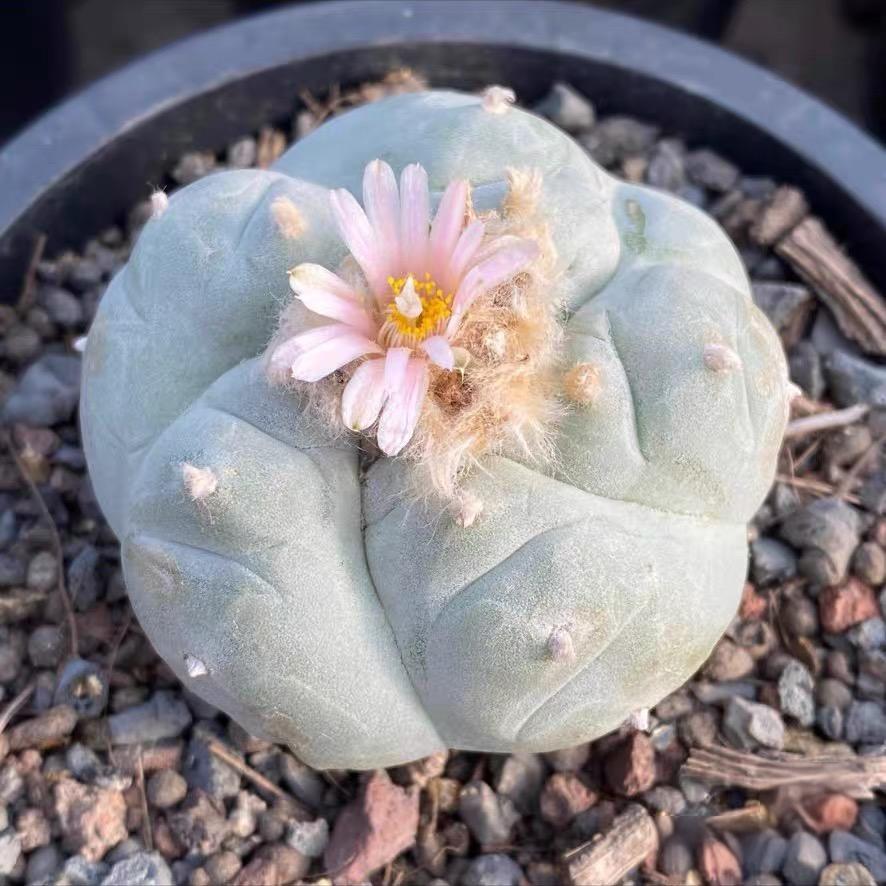
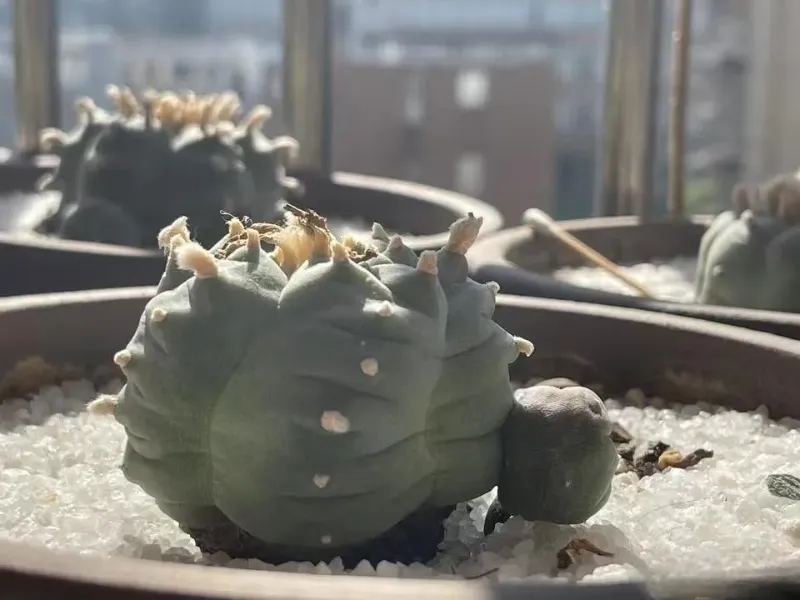
On the corner of my desk, in a transparent flower pot, sits a 1.5cm-diameter Lophophora williamsii peyote seedlings that has been my companion for eight months. From its initial state as a wrinkled "little green date" to its current plump, elastic spherical shape, it has quietly reshaped my understanding of "companionship" and "growth" with its almost motionless growth rhythm. This small, spine-free, gentle life holds a more touching code of life than mere care techniques.
I. Slow Growth: Waiting as the Gentlest Form of Companionship
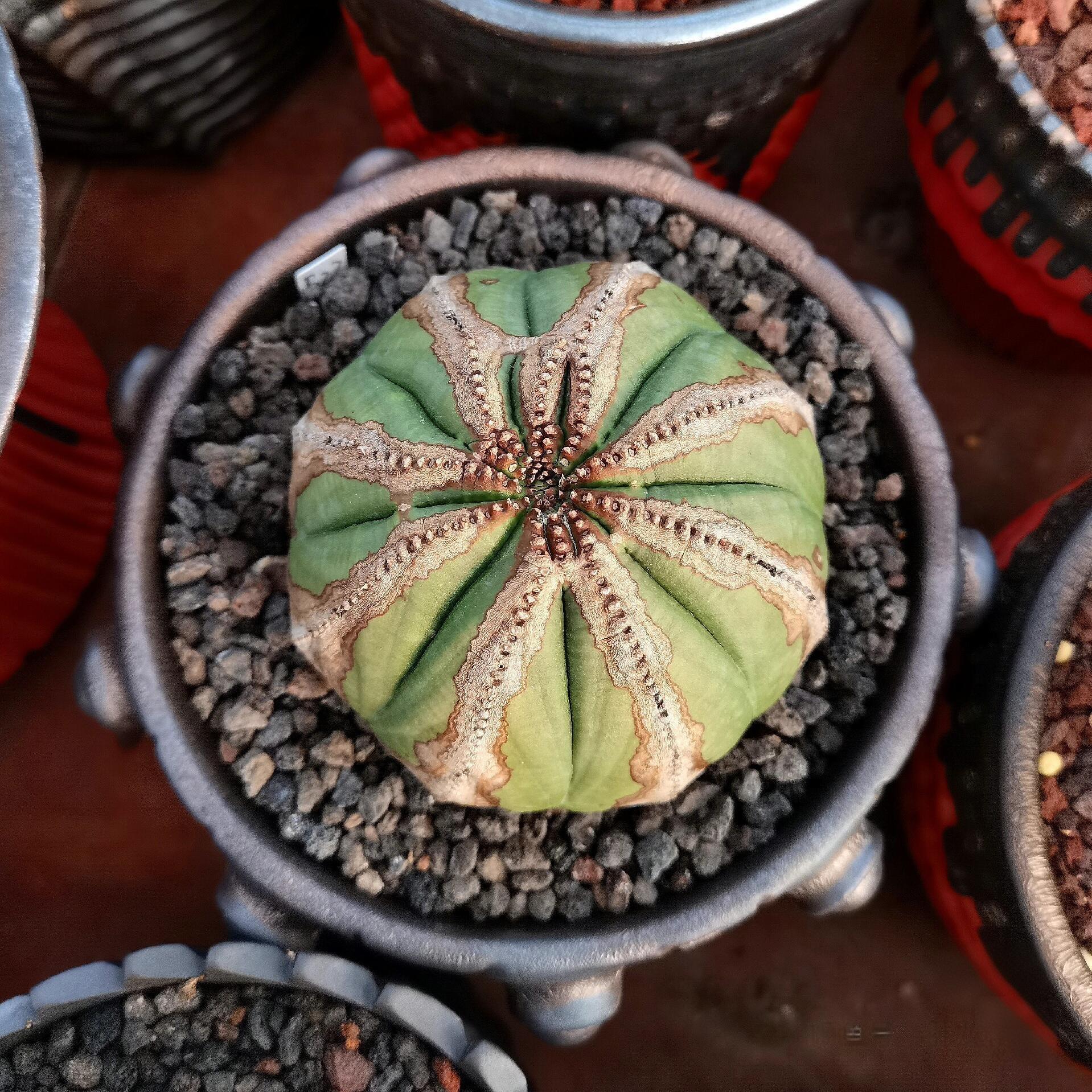
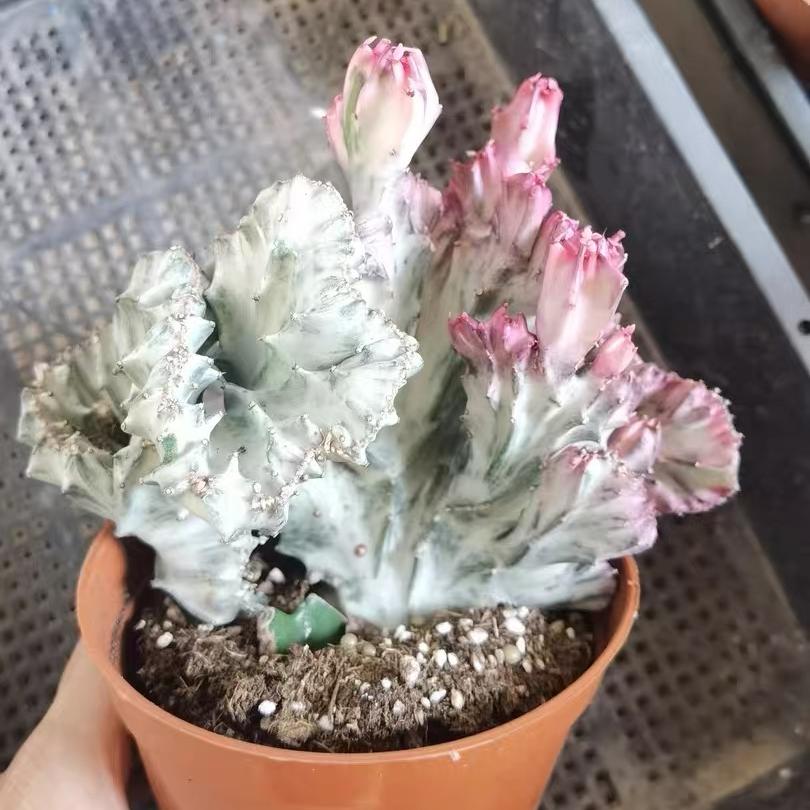
When I first saw it, I almost passed it by because it seemed "unremarkable" — its skin had a pale green tint, and only sparse fine hairs grew on its top. Compared to the nearby Lophophora diffusa (silver crown cactus) seedling covered in white powder, it looked like a "plain little thing." The seller told me, "The 'slowness' of Lophophora williamsii is in its genes. Wild ones take thirty years to bloom, and potted seedlings take one to two years just to grow to 3cm in diameter."
This "slowness" quickly taught me my first lesson. For the first two months, there was almost no change in it. I even dug through the soil every day to check its roots, worried that it had withered. Then one morning, I noticed the hairs on its top had become denser, like a small clump of white cotton. When I looked at it through a macro lens, I spotted a pinhead-sized pale green growth point hidden among the hairs — its first response to me. Later, I got into the habit of taking photos from the same angle every week. In the comparison photo I made three months later, half a vertical rib had quietly emerged at the edge of the sphere, clumsy yet determined, like a baby just learning to roll over.
This "slowness" hides its survival wisdom. Native to the arid rock crevices of Mexico,Lophophora williamsii peyote seedlings has long learned to "save energy" in water-scarce environments. Slow growth in the seedling stage is not laziness; instead, it stores all its energy in its radish-like fleshy roots. It’s similar to people in life who accumulate quietly — seemingly unremarkable on the surface, but actually taking root steadily. Now, I no longer water it frequently or fuss over it excessively. I only use the bottom-watering method to replenish moisture when the soil is completely dry. Surprisingly, its skin has become tighter and tighter, and its color has changed from pale green to a warm, moist emerald green.
II. Surprises in the Microscopic World: Vitality Hidden in Details
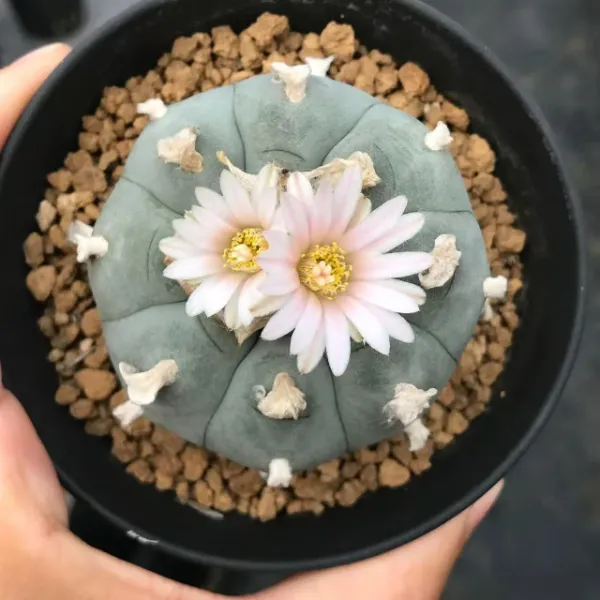
One day, I found an unused magnifying glass and discovered that this little green sphere hides a "microcosmic universe." Its surface isn’t completely smooth; instead, it’s covered in fine reticulated patterns, like silver threads embroidered by skilled hands — these are its stomata, which quietly absorb carbon dioxide at night to store energy for slow growth. The hairs on its top are even more fascinating: when magnified ten times, they look like a tiny forest. The tip of each hair can condense small water droplets, which then flow down to the roots — a water-collecting technique it inherited from its native environment.
The most touching discovery was hidden on the side wall of the transparent flower pot. One rainy evening, I saw a white new root growing along the pot wall, like a small tentacle exploring the world. It gently circled around volcanic rock particles and burrowed into the soft peat soil. In just one week, it grew 0.5cm. It turned out that those "invisible efforts" had never stopped. I suddenly realized that many times when we feel "no progress is being made," we just haven’t waited long enough to see the results.
It even "changes its outfit" quietly with the seasons. On the sunniest summer days, its skin tans to a deep green, like it’s been coated in olive oil; when the temperature drops below 15℃ in late autumn, it slowly shrinks its sphere, and the hairs on its top become sparse, as if tucking itself into a small quilt to prepare for dormancy. I recorded these changes in a notebook, along with photos from different seasons, and before I knew it, I had compiled a "Seedling Growth Journal."
III. A Hermit in Culture: Quiet Vitality Without Showiness
In the cactus enthusiast community, Lophophora williamsii peyote seedlings is known as the "hermit among cacti." This is probably because it never uses spines to defend itself or flaunts itself with white powder, yet it carries a unique spiritual mark. Ancient Indians once used it in religious rituals, believing it could bring "spiritual awakening." Later, European explorers discovered that mescaline, a substance in this plant, can induce hallucinations but does not cause dependence — just like its character, gentle yet powerful.
Today, wild Lophophora williamsii is listed in Appendix II of the Convention on International Trade in Endangered Species of Wild Fauna and Flora (CITES), so most seedlings on the market are artificially propagated. Every time I look at my little seedling, I think of those wild individuals struggling to grow in rock crevices. They survive in temperatures exceeding 50℃ and extreme temperature differences, shrinking underground during dry seasons to wait for the rainy season — a testament to the resilience of "survival." This makes me cherish my seedling even more; it is not just a potted plant, but a legacy of nature’s wisdom.
Last month, I shared the story of my seedling’s growth in an enthusiast community, and to my surprise, I received many responses. Someone posted photos of a five-year-old "mature plant" with spiral vertical ribs forming an elegant curve; another person said they were so excited when their Lophophora williamsii bloomed for the first time that they took dozens of photos. It turned out that on countless desks and balconies, there are countless people like me, healed by this slow-growing little life.
Epilogue: Companionship as Mutual Growth
Now, I can tell if it needs water just by feeling the elasticity of its sphere, and I can "read its mood" from the state of its hairs. This Lophophora williamsii seedling has never bloomed with stunning flowers or grown into a strange shape, yet with its simplest growth rhythm, it has taught me the patience to wait, the sharpness to observe, and the respect for tiny lives.
Perhaps the true meaning of growing plants is never just "keeping them alive," but seeing a more delicate world through interacting with another form of life. Just like this Lophophora williamsii seedling — it grows slowly, and I become a better person gradually. In this fast-paced life, we have both found the courage to slow down in each other’s presence. Next time someone asks, "How do you grow a Lophophora williamsii seedling?" I think I will say, "No need to rush — just grow with it, slowly."